Mar 1, 2026
Women’s History Month: 4 Early Automotive Innovators Who Helped Shape the Way We Drive
March is Women’s History Month, a time to celebrate the achievements of women whose ideas and determination helped shape industries around the world. While the early automotive industry is often portrayed as a male-dominated space, women played an essential role in advancing vehicle safety, comfort, and real-world usability during the earliest days of motoring.
From groundbreaking inventions to pivotal demonstrations of automotive potential, these four women helped influence the way we drive today.
Mary Anderson and the Early Windshield Wiper
Mary Anderson was an American inventor whose work helped make driving safer in poor weather conditions. In 1902, while visiting New York City, Anderson noticed streetcar drivers repeatedly stopping to manually clear snow and ice from their windshields. Recognizing both the inconvenience and danger, she envisioned a mechanical solution that could be operated from inside the vehicle.
In 1903, Anderson was granted a patent for an early windshield cleaning device. Although her invention laid the foundation for the modern windshield wiper, it was initially dismissed by manufacturers, who believed it would distract drivers. As a result, Anderson never profited from her invention. Windshield wipers would not become widely adopted until the early 1920s, when automobile manufacturers began offering them as standard equipment.
Today, windshield wipers are an essential automotive safety feature, and Mary Anderson’s contribution remains a powerful example of innovation ahead of its time.

Bertha Benz and the First Long-Distance Automobile Journey
Bertha Benz played a critical role in proving the practicality of the automobile. In 1888, she completed the first long-distance automobile journey, traveling approximately 66 miles (106 kilometers) from Mannheim to Pforzheim, Germany, without informing her husband, automotive pioneer Carl Benz, beforehand.
During the journey, Bertha demonstrated remarkable ingenuity. She repaired brake components, improvised fuel solutions, and identified mechanical improvements that would later be incorporated into the vehicle’s design. Her trip attracted public attention and helped show that automobiles could be used for everyday travel rather than short demonstrations.
Often described as Carl Benz’s business partner as much as his spouse, Bertha Benz’s journey helped legitimize the automobile and accelerate public interest in early motor vehicles.
Florence Lawrence and Early Automotive Safety Concepts
Florence Lawrence was a Canadian-American actress often referred to as the world’s first movie star, but she also had a strong interest in automotive safety. While she did not hold patents for automotive inventions, Lawrence is frequently associated with early concepts related to vehicle signaling and braking indicators.
She reportedly developed ideas for signaling devices that could indicate a vehicle’s intended movements, as well as visual brake indicators to alert drivers behind her when slowing down. Although these ideas were not formally patented or commercialized by Lawrence herself, they reflect an early awareness of the need for communication and safety on increasingly crowded roadways.
Her contributions are best understood as conceptual innovations that helped inspire later developments in automotive signaling and safety technology.

Margaret Wilcox and Early Vehicle Heating Concepts
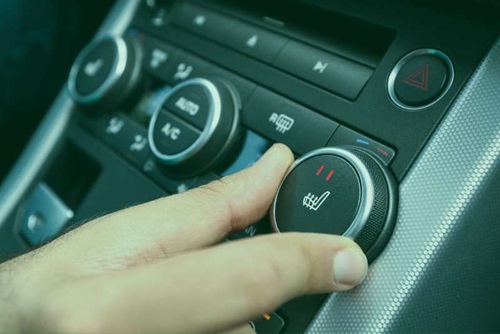
Margaret Wilcox was an American inventor whose work focused on improving passenger comfort in transportation. In the late 19th century, she patented a heating system designed to use excess engine heat to warm railway cars. While her invention was not originally created for automobiles, the concept of redirecting engine heat would later become foundational to vehicle heating systems.
Wilcox also held patents for additional transportation-related innovations aimed at improving passenger convenience. Her work highlights how early engineering solutions developed for rail travel influenced comfort features that eventually became standard in automobiles.
Honoring Women in Automotive History
These early automotive innovators challenged expectations and helped shape the foundations of modern driving. Their creativity and determination contributed to safer vehicles, greater comfort, and broader acceptance of automobiles as practical transportation.
While this list represents only a small portion of the women who influenced automotive history, their stories serve as a reminder that innovation has always been driven by diverse perspectives.
To learn more about Women’s History Month and discover events and resources, visit womenshistorymonth.gov.
Until next time… We’re Always Here To Get You There®
About Sullivan Tire and Auto Service:
Headquartered in Norwell, Mass., Sullivan Tire and Auto Service is New England’s home for automotive and commercial truck care with 83 retail locations; 21 commercial truck centers; 14 wholesale distribution satellite locations; two truck tire retread plants; two LiftWorks facilities; and five distribution centers, across Massachusetts, New Hampshire, Rhode Island, Connecticut and Maine. The foundation upon which Robert J. Sullivan started Sullivan Tire in 1955 was, “Treat everyone, customers and fellow employees, as you would a member of your family,” and that tradition continues today. In 2023 Sullivan Tire announced a new Employee Stock Ownership Plan (ESOP), turning ownership of the company over to its more than 1,500 employees. For more information on Sullivan Tire please visit www.sullivantire.com.
Related Articles

4 Black Automotive Innovators You Should Know | Sullivan Tire